GCSE
Oxidation and reduction Fractional distillationGCSE AQA
ionic bonding Metal oxides The Earth's early atmosphereGCE OCR
https://www.ocr.org.uk/Images/171720-specification-accredited-a-level-gce-chemistry-a-h432.pdf https://www.ocr.org.uk/qualifications/as-and-a-level/chemistry-a-h032-h432-from-2015/ https://www.ocr.org.uk/qualifications/as-and-a-level/chemistry-a-h032-h432-from-2015/changes-for-2022/
- Reference:
- ph-of-common-chemicals
The Mole
In chemistry we are interested in the number of particles we have in a sample. Whether these particles are atom, molecules, compounds, electrons, ions, e.t.c. However, in the laboratory it is not easy to count particles as they are so small ( in diameter). It is far easier to measure the mass or volume of a sample and the convert to number of particles. This conversion can be done using the idea of the mole and the equations following:
- where
- is the mass of the sample in grammes, g;
- is number of moles in the sample, in moles, mol;
- is the relative formula mass of the sample in grammes, g;
- is the number of particles in the sample;
- and
- is the Avogradro constant.
Questions:
Calculations using Moles
(Care of mmerevise.co.uk)
Mole Calculations
(Care of centraltutors.co.uk)
Amount of Substance
(Care of www.physicsandmathstutor.com)
Amount of Substance
(Care of www.a-levelchemistry.co.uk)
A Derivation for the Mole
The statement above is the number of moles. This can be derived thus:
- where
- is the mass of each particle and for this derivation particles means atoms;
- and
- the other variables are as above.
is given by
- where
- is the mass of each nucleon.
So
but
(as long as we measure the mass of a nucleon in grams)
Therefore
which is the number of moles for a pure element. It is rare to deal with a pure element. In most cases naturally occuring elements which are mixtures of isotopes, or compounds. In these cases we need the relative molecular masses . So,
Electronic Structure
The electrons form the electronic structure of an atom by occupy the lowest available energy levels first. The electronic structure of an atom can be represented by numbers (numerically) or in a diagram (graphically). For example, for sodium, by numerically, or by
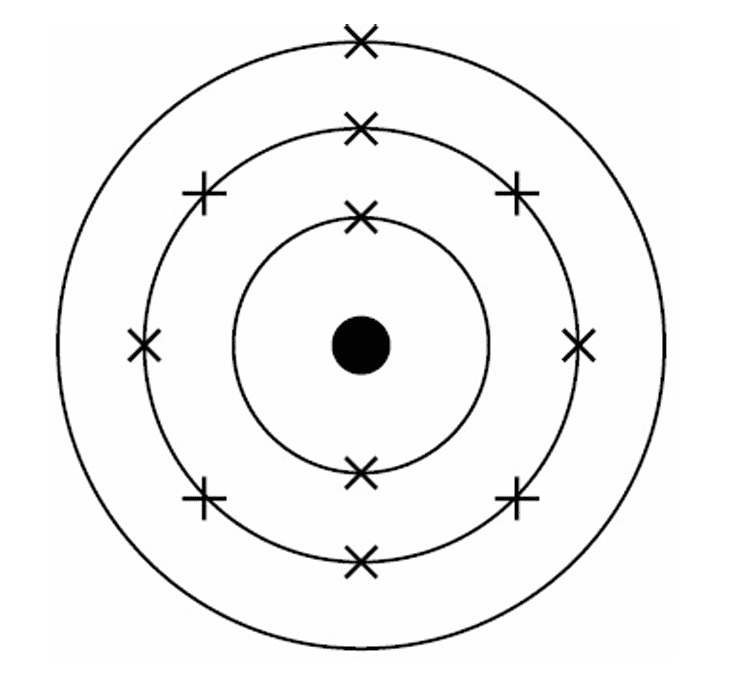
showing electrons in the lowest energy configuration :two electrons in the lowest energy level, eight in the second energy level and one in the outer energy level. Note: this is not a representation position but of energy.
Representations of the electronic structures of the first twenty elements of the periodic table are very systematic and you should be able to do these both graphically and numerically.
Electrolysis
Prerequisites:
Conduction
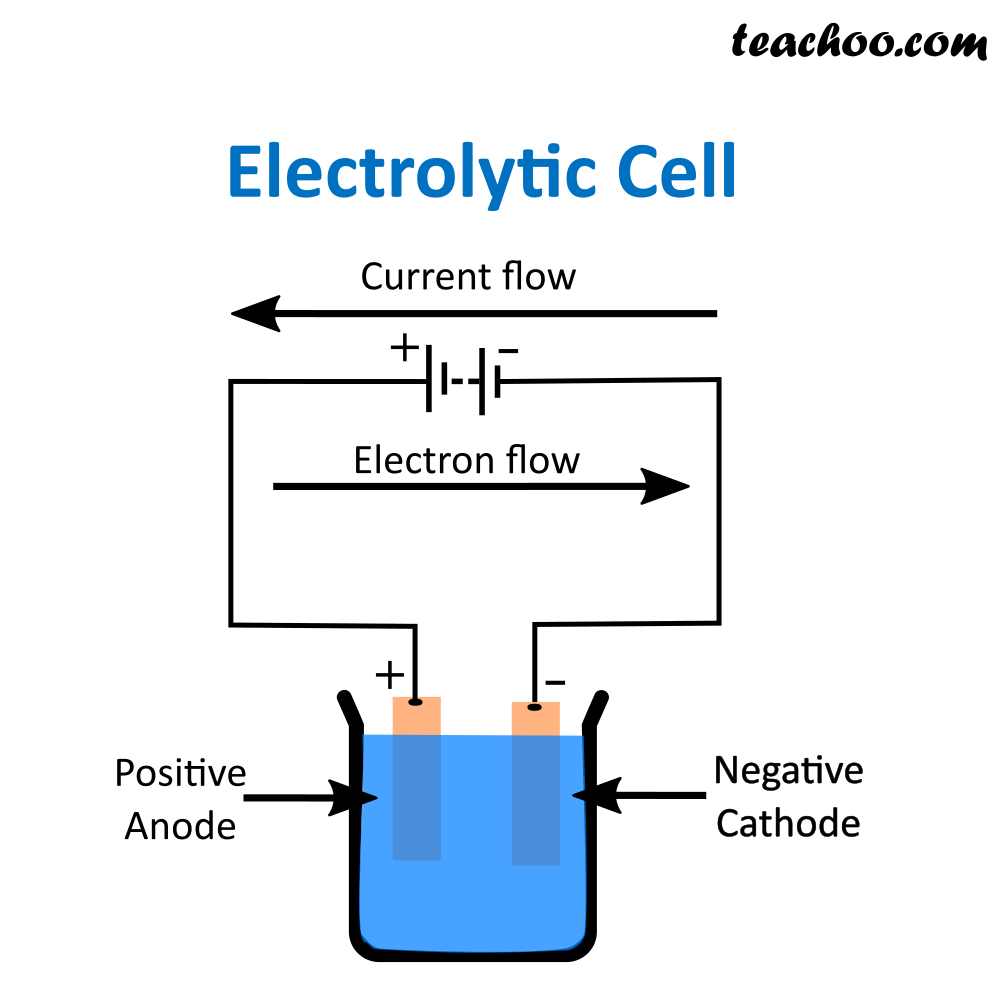
The Process of Electrolysis
(Care of www.savemyexams.com)
Electrolysis of Molten Ionic Compounds
(Care of www.savemyexams.com)
Electrolysis and REDOX
(Care of www.savemyexams.com)
Electrolysis of Sodium Chloride
(Care of www.gcsescience.com)
Electrolysis of Copper Sulphate
(Care of www.physicsandmathstutor.com)
Electrolysis Revision
(Care of mmerevise.co.uk)
Explaining Electrolysis
(Care of studymind.co.uk)
Required Practical Video
(Care of @Freesciencelessons)
- 4.3 Electrolysis QP [ MS ]
- 4.3 Electrolysis 1 QP [ MS ]
- 4.3 Electrolysis 2 QP [ MS ]
- 4.3 Electrolysis 3 QP [ MS ]
Periodic Table

pdf version (page 110)
Periodic
Table Apps
Making Glue
How to make glue from flour
Two recipes one involving cooking
(Care of onelittleproject.com)
Alternatives including milk glue
(Care of www.thoughtco.com)
Other videos
... Duckduckgo to search for more ...
Chemical Equilibrium
If the concentrations of all the substances present at equilibrium are raised to the power of the number of moles as they appear in the equation, the product of these for the products is divided by the same for the reactants will be a constant, provided the temperature remains constant.
Two equilibrium constant types:
is an equilibrium constant calculated from the concentrations of reactants and products;
is an equilibrium constant calculated from the partial pressures of reactants and products.
Calculating Equilibrium Constants
The letters indicate the coefficients used to balance the equation while the letters represent the substances (element, molecules or compounds) involved in the equilibrium reaction. The equilibrium constant for such a reaction can be written as:
Where [ ] denotes the equilibrium concentration usually in
The value of is affected by changes in temperature.
is unaffected by changes in concentration, pressure nor the presents of a catalyst.
Atomic Economy
Atomic Economy
(Care of www.bbc.co.uk/bitesize)
Yield and Atom Economy Questions and Revision
(Care of mmerevise.co.uk)
Yield & Atom Economy - AQA GCSE Chemistry Exam Questions & Answers
(Care of www.savemyexams.com)
... search for more ...
(Via duckduckgo.com)
... see also Yield ...
Metallic Bonding
Metallic bonding occurs in metallic elements and alloys.
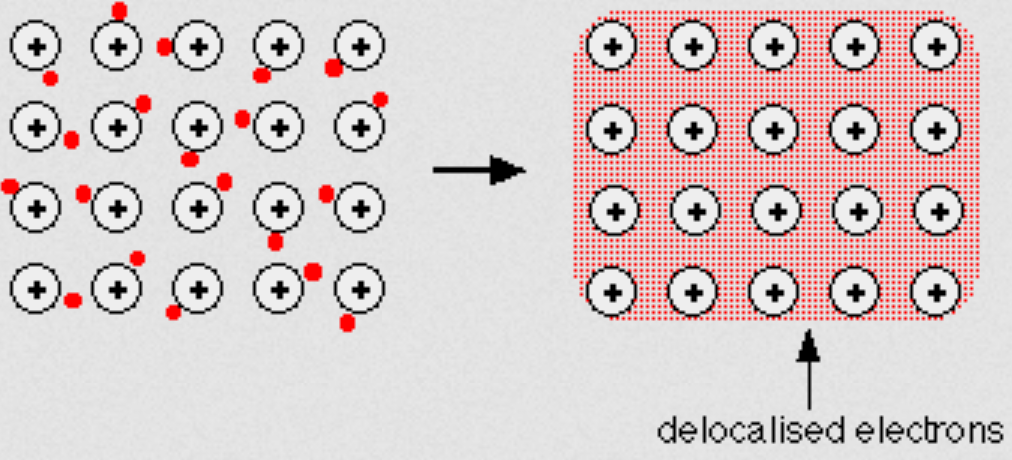
Metals, and alloys, consist of giant structures of atoms arranged in a regular pattern. The electrons in the outer shell of metal atoms are delocalised and so are free to move through the whole structure. The sharing of delocalised electrons gives rise to strong metallic bonds. This is represented by the figure above. Keep in mind this representation is 2D where in reality metal structures are 3D. Think of several copies of the above pilled on top of each other. Movement of the delocalised electrons are what give the properties of heat and electrical conduction.
Metallic Bonding
(Care of www.savemyexams.com)
Metallic Bonding
(Care of mmerevise.co.uk)
Metallic Bonding
(Care of studyrocket.co.uk)
Reactivity Series
In chemistry, the reactivity series of metals, in order of chemical reactivity from highest to lowest. It shows a summary information about the chemical reactions of metals with acids and water, and how the metals are extracting.
The reactivity series follows, starting at the most reactive, to the least reactive:
| Metal | Ion | Reactivity | Extraction |
|---|---|---|---|
| Potassium, | reacts with cold water | Electrolysis (a.k.a. electrolytic refining) |
|
| Sodium, | |||
| Lithium, | |||
| Calcium, | |||
| Magnesium, | reacts very slowly with cold water, but rapidly in boiling water, and very vigorously with acids |
||
| Aluminium, | reacts with acids and steam | ||
| Carbon, | |||
| Zinc, | reacts with acids; very poor reaction with steam | smelting with coke | |
| Iron, | |||
| Tin, | |||
| Lead, | |||
| Hydogen, | |||
| Copper, | reacts slowly with air | heat or physical extraction | |
| Silver, Ag | may react with some strong oxidizing acids | ||
| Gold, | |||
| Platinum, | |||
Carbon and hydrogen are not metals, but are included for reference.
A more complete list is available at reactivity series (Care of wikipedia.org).