Astonomy - The View from Earth
Look up in the sky at any time and you will be objects that seem further away than the clouds that pass. In the day time your likely to only see two: the Sun and possibly the moon. Rarely will you see more, but at night it's a different matter.
The Solar System
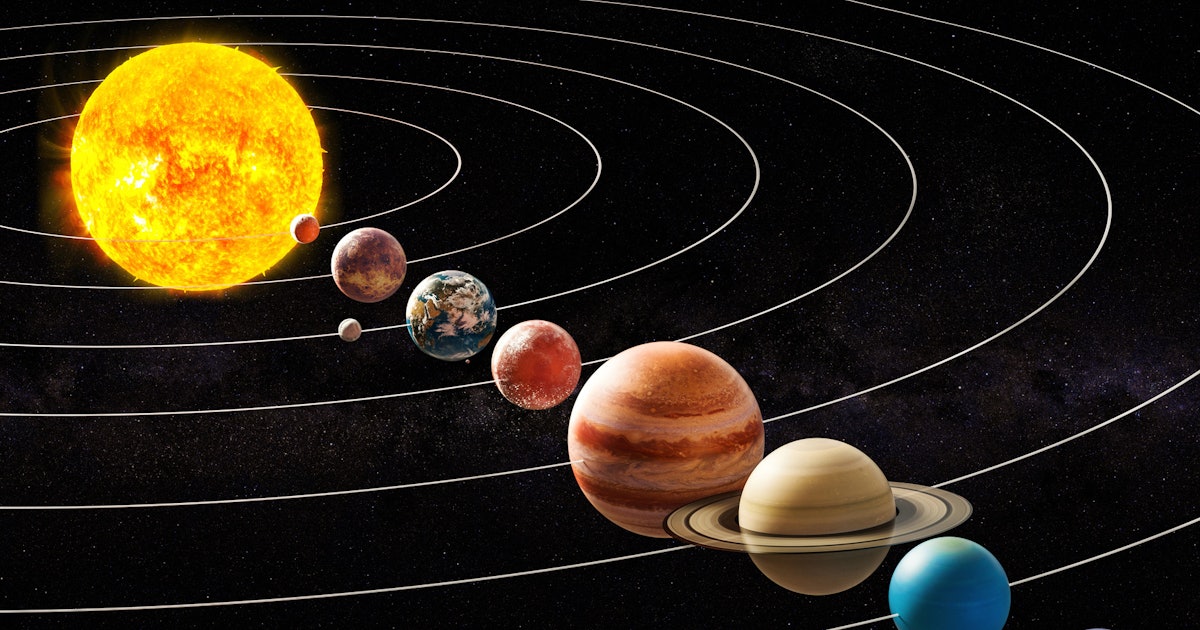
Near the centre of the solar system is one star, the Sun. Around the Sun orbit eight planets and several dwarf planets. Natural satellites, the moons that orbit planets, are also part of the solar system. Other planetary systems exist around other stars. The solar system is just a small part of the Milky Way galaxy, an example of a galaxy. Galaxies contain billions of stars that all orbit a centre point.
planets
Unlike stars, planets do not emit their own light. Planets are bright because they reflect the light of the local star. In our solar system, the inner four planet: Mercury, Venus, Earth and Mars are known as the "rocky" planets. They are all hard, solid with rocky surfaces. Jupiter, Saturn, Uranus and Neptune are known the gas giants. These are the outer planets and they do not have a surface like the inner planets.
Obital Motion:
Gravity provides the force that allows planets and satellites to maintain their orbits. Planets and dwarf planets orbit a star, satellites orbit planets. For circular orbits, the force of gravity can lead to changing velocity but unchanged speed. For a stable non-circular orbit, the radius must change if the speed changes.
See circular motion for more on movement in a circle
Kepler's Laws of Planetary Motion
First Law
The orbit of a planet is an ellipse with the Sun at one of the two foci.
Second Law
A line segment joining a planet and the Sun sweeps out equal areas during equal intervals of time.
Third Law
The square of a planet's orbital period is proportional to the cube of the length of the semi-major axis of its orbit.

- Black Holes
- What is a Black Hole?
- Black hole breakthroughs win Nobel prize for physics
- Most Famous Physics Paradox Nears Its End
Quasars
Quasars are the most distant measurable objects. Quasars were discovered as bright radio sources. Quasars show large optical red shifts; estimation involving distance and power output. Formation of quasars from active supermassive black holes. ... more from simple.wikipedia.org
Questions
Cosmology
[ MS ]
(care of www.physicsandmathstutor.com)
... search for more ...
(care of duckduckgo.com)
Expanding Universe
Star Development
or, The Evolution of Stars
Stars come in a range of masses, sizes and luminosities: masses can range from a tenth the mass of our sun to a couple of hundred times more massive; star radii range from 60,000 km to some 1,500 times that of the sun; the luminosity of stars can be 5,000,000 times more than the sun to as low as to be not visible to the naked eye.
The nearest star is our Sun, a yellow dwarf star, it is 150 million kilometres from Earth (or 8 light mimutes). The Suns Surface temperature ranges from 4000 to 6000°C with the core temperature being 15 million°C. There are eight plants orbiting the Sun: Mercury, Venus, Earth, Mars, Jupiter, Saturn, Uranus, Neptune.
The next nearest star is Alpha Centauri which has two confirmed exo-planets in orbit.
Sun facts
(Care of NASA Science)

Star Development
The Sun was formed from a cloud of dust and gas (a nebula) being pulled together by gravitational forces.
- Can you explain:
- how, at the start of the cycle of a star, the dust and gas drawn together by gravity causes heating and ultimately fusion reactions;
- that fusion reactions lead to an equilibrium between the collapse under gravity towards the centre of the star and the expansion of a star due to fusion energy radiating outward.